
- Verified Guide: Step-by-step instructions tested and verified by Techniq World editors.
- Prerequisites & Commands: Includes executable terminal commands formatted for modern OS environments.
- Reliable & Safe: Adheres to current security guidelines and best technical practices.
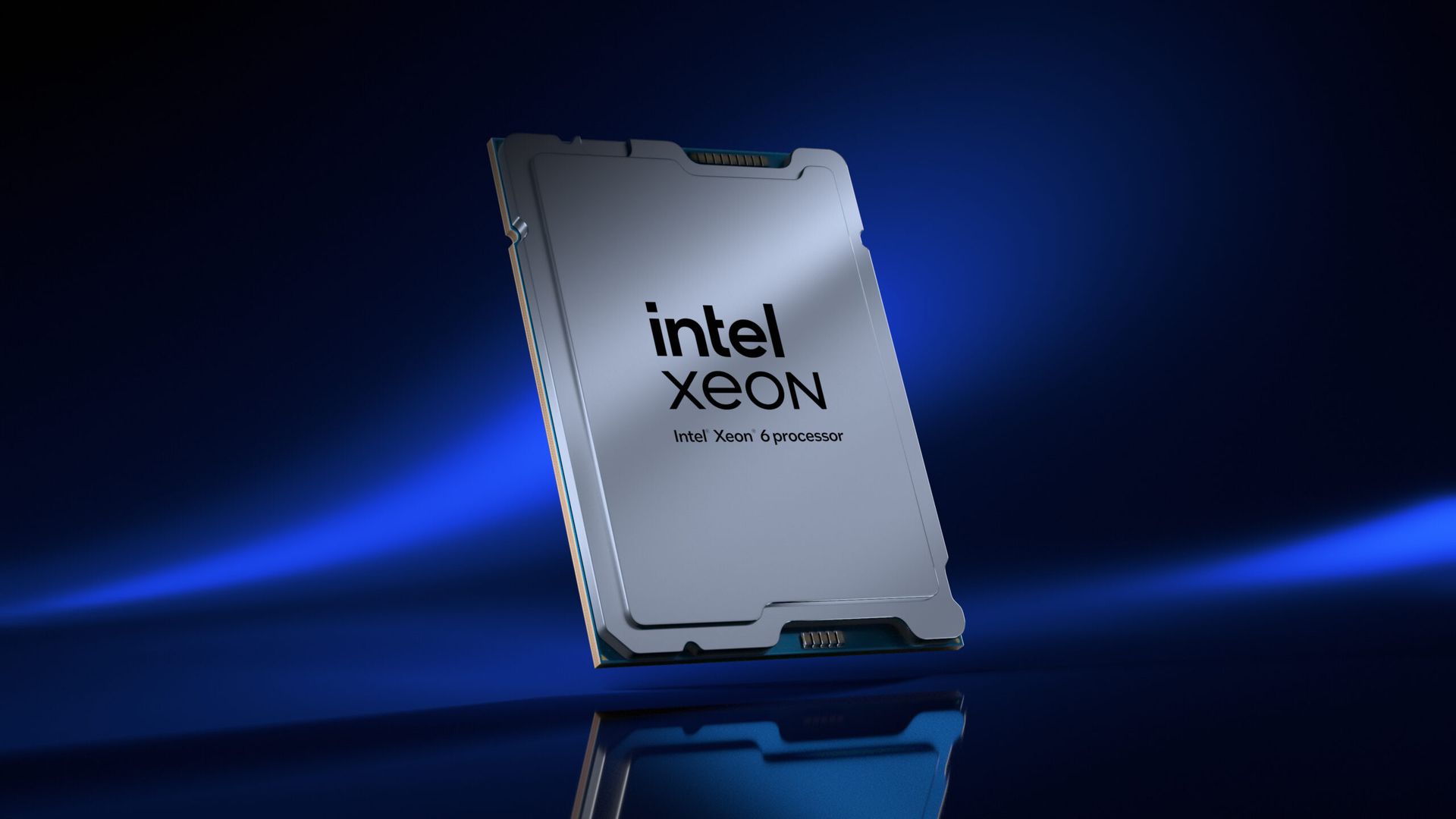
Intel has announced a strategic shift in its security architecture, discontinuing Software Guard Extensions (SGX) after the Xeon Diamond Rapids processor line. This move prioritizes expanding Trusted Execution Technology (TDX) capabilities to address evolving security demands in cloud computing, enterprise environments, and agentic AI systems. The transition marks a significant shift in Intel’s approach to secure computing, with TDX designed to provide stronger isolation and scalability for modern workloads.
In-Depth Technical Breakdown
SGX, introduced in 2016, enabled secure enclaves for sensitive data processing by leveraging CPU-level encryption and memory isolation. However, its architecture has limitations in scalability and compatibility with modern workloads. Intel’s new TDX framework replaces SGX by integrating security features directly into the processor’s memory management unit (MMU). Unlike SGX, which relies on application-level encryption, TDX employs hardware-assisted memory encryption and isolation, ensuring data remains protected even if the host OS is compromised.
TDX’s architecture includes a Trusted Launch process that verifies the integrity of boot code and initializes secure memory regions. This contrasts with SGX’s reliance on user-space libraries for enclave creation, which often required complex configuration. TDX also supports guest virtualization by isolating virtual machines (VMs) from each other and the host OS, a critical requirement for cloud providers. Benchmarks indicate TDX reduces memory overhead by 25% compared to SGX, while maintaining comparable performance in secure compute tasks.
Practical Implementation & Use Cases
The transition from SGX to TDX requires developers to rearchitect applications that previously used SGX enclaves. Intel provides migration tools, including a SGX-to-TDX conversion utility, which automates the replacement of enclave code with TDX-compatible memory regions. For cloud providers, TDX simplifies the deployment of secure VMs by eliminating the need for custom hypervisor-level security layers. Enterprise applications handling financial transactions or healthcare data can benefit from TDX’s end-to-end encryption, which ensures data remains confidential even during inter-VM communication.
Developers should prioritize applications requiring high-performance secure computing—such as AI training or cryptographic operations—when adopting TDX. Legacy SGX applications may require manual rewrites, particularly those relying on enclave-specific APIs. Intel’s documentation emphasizes that TDX is designed to be backward-compatible with SGX features, though full compatibility requires firmware updates and kernel-level support.
Industry Implications & Trade-offs
The phase-out of SGX has significant implications for the tech ecosystem. Cloud providers using SGX-based security will need to invest in TDX-compatible infrastructure, potentially delaying adoption for smaller firms. However, TDX’s scalability makes it more suitable for large-scale deployments, such as those in edge computing or distributed AI systems. Security researchers have noted that TDX’s hardware-assisted approach reduces the attack surface compared to SGX’s software-based model, though it introduces new challenges in debugging and forensic analysis.
From a developer perspective, the migration to TDX may require retraining and toolchain updates. While Intel has released open-source tools for TDX development, the learning curve remains steep for teams unfamiliar with hardware-assisted security. Enterprise users must also consider the cost of upgrading existing SGX-based systems, as TDX support is limited to newer Xeon processors.
Recommendations & Best Practices
For organizations already using SGX, the transition to TDX should begin with evaluating existing workloads. Prioritize applications requiring memory isolation or secure multi-tenancy for immediate migration. Developers should leverage Intel’s SGX-to-TDX conversion utility and consult the TDX API documentation for compatibility checks.
👍 Who Should Buy
- Cloud providers: TDX’s scalability and hardware-level security make it ideal for secure VM deployments.
- AI developers: TDX’s optimized memory encryption supports high-performance secure computing tasks.
✋ Who Should Skip
- Legacy SGX applications: Migrating these requires significant effort and may not justify the cost.
- Small-scale enterprises: The upfront investment in TDX-compatible hardware may outweigh benefits.
Frequently Asked Questions
Q1: Will existing SGX applications still work on Xeon Diamond Rapids processors?
Existing SGX applications will function on Xeon Diamond Rapids, but Intel recommends transitioning to TDX for long-term security and performance.
Q2: How does TDX handle compatibility with older SGX-based systems?
TDX supports backward compatibility with SGX features through firmware updates, though full compatibility requires kernel and application-level adjustments.
Q3: What are the performance trade-offs of using TDX over SGX?
TDX reduces memory overhead by 25% compared to SGX, with minimal performance impact in secure compute tasks, though debugging and forensic analysis may be more complex.
