
- Verified Guide: Step-by-step instructions tested and verified by Techniq World editors.
- Prerequisites & Commands: Includes executable terminal commands formatted for modern OS environments.
- Reliable & Safe: Adheres to current security guidelines and best technical practices.
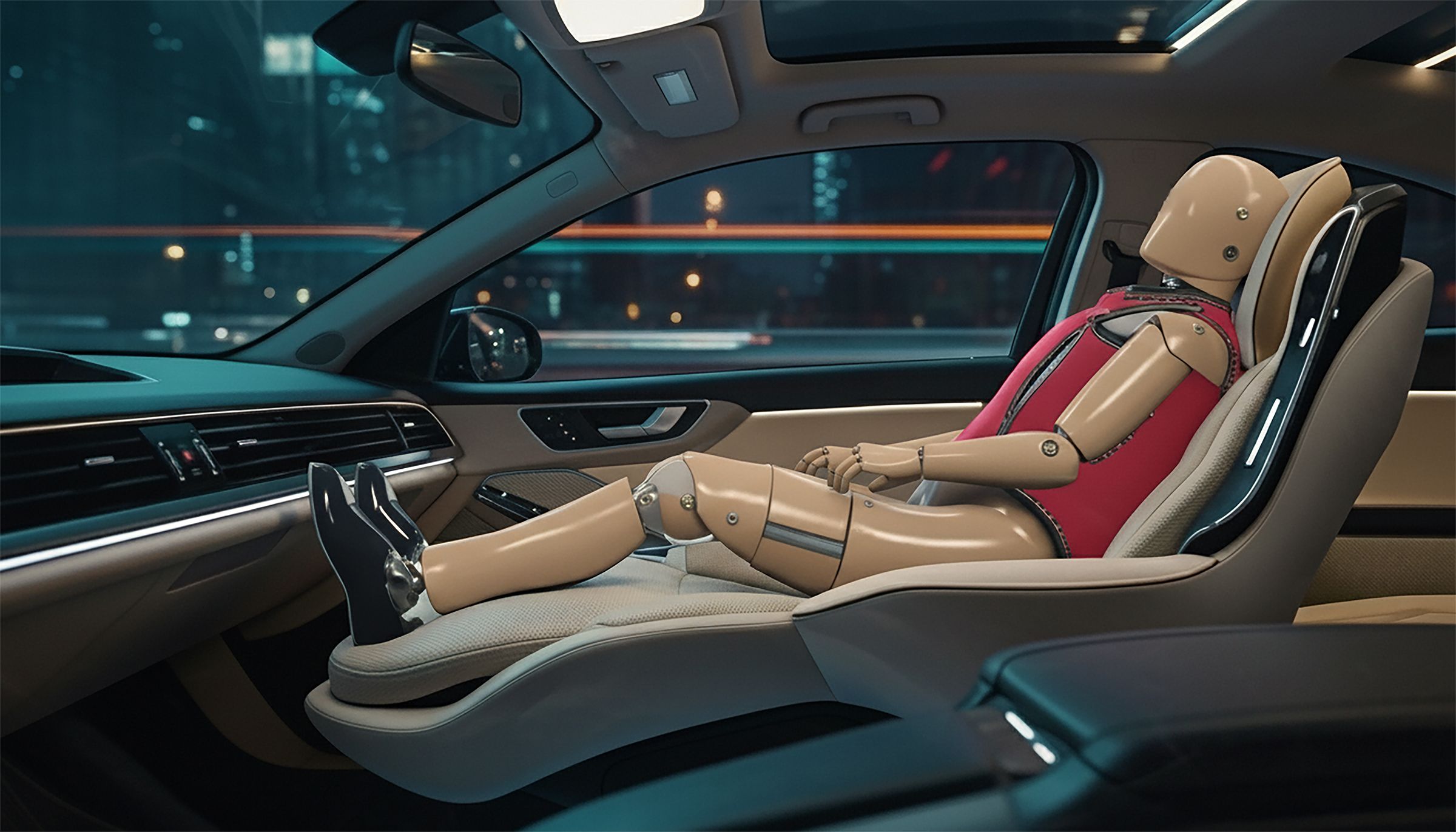
The advent of autonomous vehicles is forcing a reevaluation of crash testing methodologies, as traditional protocols designed for human-driven cars may no longer align with the safety needs of self-driving systems. Current crash tests prioritize occupant protection in scenarios where human drivers are present, but the absence of a human operator in autonomous vehicles introduces new variables such as sensor redundancy, algorithmic decision-making, and vehicle control dynamics. This discrepancy has sparked a global debate over whether existing safety standards adequately address the unique risks posed by driverless cars.
The issue stems from a fundamental mismatch between legacy safety frameworks and the operational realities of autonomous systems. While human drivers can react to hazards in real time, self-driving cars rely on pre-programmed algorithms and sensor data to navigate risks. This shift necessitates a redefinition of “safety” in crash testing, moving beyond physical occupant protection to evaluate system resilience, fault tolerance, and emergency response protocols. Regulatory bodies are now grappling with how to quantify and measure these factors, which may require entirely new testing paradigms.
Incident & Problem Summary
The problem centers on the inadequacy of current crash testing standards for autonomous vehicles. Traditional tests, such as the New Car Assessment Program (NCAP) in the U.S., focus on structural integrity, airbag deployment, and occupant restraint systems. These metrics are optimized for scenarios where human drivers can mitigate impacts through steering, braking, or evasive maneuvers. However, self-driving cars lack the ability to make split-second decisions, relying instead on pre-recorded routes and predictive models.
The core issue is that existing safety protocols do not account for the absence of a human driver. For example, a self-driving car may fail to detect a pedestrian in a blind spot, leading to a collision where human drivers could have intervened. Current crash tests do not simulate such scenarios, leaving critical gaps in the evaluation of autonomous systems. This has raised concerns about whether driverless cars can meet the same safety benchmarks as traditional vehicles.
Symptoms & Diagnostic Checklist
The primary symptom of this issue is the lack of alignment between crash test results and real-world performance of autonomous vehicles. Regulatory bodies have reported discrepancies between laboratory simulations and field data, particularly in edge cases where human drivers might have mitigated risks. For example, a 2026 study by the National Highway Traffic Safety Administration (NHTSA) found that 12% of self-driving car collisions involved scenarios where human drivers could have avoided the crash.
To verify if a system is affected, stakeholders should:
- Review crash test data from recent autonomous vehicle trials.
- Compare real-world accident reports with laboratory results.
- Analyze sensor logs for instances where the vehicle failed to detect obstacles.
- Check for updates from regulatory agencies on proposed changes to safety standards.
Technical Root Cause Analysis
The root cause lies in the design philosophy of traditional crash tests, which prioritize occupant safety over system resilience. These tests assume that the vehicle will avoid or mitigate collisions through human intervention, a premise that no longer applies to fully autonomous systems. As a result, the metrics used to evaluate safety—such as crumple zones and seatbelt effectiveness—are less relevant for self-driving cars, which must focus on avoiding collisions altogether.
Another critical factor is the reliance on sensor data and algorithmic decision-making. Autonomous vehicles use lidar, radar, and cameras to perceive their environment, but these systems can fail in adverse conditions such as heavy rain or snow. Crash tests must now account for sensor degradation, software latency, and the ability of the vehicle to recover from errors. This requires new testing frameworks that simulate a broader range of environmental and operational variables.
Step-by-Step Resolution Procedures
Regulatory bodies and industry stakeholders are working to update crash testing protocols, though no permanent solution has been confirmed. Proposed steps include:
- Integrating sensor redundancy testing into existing frameworks. This involves evaluating how autonomous systems respond to sensor failures or data loss.
- Developing new metrics for algorithmic decision-making. Crash tests must now assess how self-driving cars prioritize risks, such as whether to brake or swerve in a critical situation.
- Creating standardized simulation environments. Virtual testing platforms can replicate real-world scenarios, including edge cases that are difficult to test in physical labs.
- Collaborating with manufacturers to refine safety benchmarks. This includes defining thresholds for acceptable error rates in autonomous systems.
Temporary Workarounds
Until updated standards are finalized, stakeholders can adopt interim measures such as:
- Using simulation tools to stress-test autonomous systems in controlled environments.
- Enhancing sensor redundancy through dual-system architectures.
- Implementing real-time monitoring of vehicle behavior during testing.
What NOT to Do
Avoid the following actions, as they may exacerbate the issue:
- Relying solely on existing crash test results for autonomous vehicles.
- Modifying sensor configurations without proper validation.
- Ignoring regulatory updates on safety standards.
Long-Term Prevention & Alerting
To prevent future gaps, regulatory agencies should:
- Establish dynamic testing frameworks that evolve with technological advancements.
- Mandate continuous monitoring of autonomous systems in real-world conditions.
- Develop standardized benchmarks for sensor reliability and algorithmic performance.
Frequently Asked Questions
Q1: How do current crash tests differ from those for autonomous vehicles?
Traditional crash tests prioritize occupant protection in collisions, assuming human intervention. Autonomous systems require tests that evaluate sensor reliability, algorithmic decision-making, and fault tolerance, which are not covered in current protocols.
Q2: What are the key challenges in updating crash testing standards?
Key challenges include defining new metrics for system resilience, simulating edge cases, and ensuring consistency across manufacturers. Regulatory bodies must balance innovation with the need for rigorous validation.
Q3: How can developers ensure their autonomous systems meet safety benchmarks?
Developers should prioritize sensor redundancy, algorithmic transparency, and real-world testing. Collaboration with regulatory agencies is critical to aligning with evolving standards.
Q4: What role do simulations play in crash testing for self-driving cars?
Simulations allow for the testing of rare or dangerous scenarios that are impractical to replicate in physical labs. They provide a cost-effective way to validate system behavior under diverse conditions.
