
- Verified Guide: Step-by-step instructions tested and verified by Techniq World editors.
- Prerequisites & Commands: Includes executable terminal commands formatted for modern OS environments.
- Reliable & Safe: Adheres to current security guidelines and best technical practices.
Neutrinos, among the most elusive particles in the universe, exhibit a phenomenon known as neutrino oscillation—a process in which they transition between different flavors (electron, muon, and tau) as they propagate. This behavior, governed by the weak nuclear force, has profound implications for astrophysical events like supernovae. Recent community reports suggest that neutrino identity swapping during a supernova may alter energy dynamics, potentially leading to a direct collapse of the stellar remnant rather than the typical explosion-driven supernova. While this hypothesis remains unconfirmed, its implications for astrophysics and particle physics warrant rigorous technical scrutiny.
In-Depth Technical Breakdown
Neutrino Oscillation and Supernova Dynamics
Neutrinos are produced in vast numbers during a supernova’s core collapse, where the gravitational collapse of a massive star’s core generates intense neutrino fluxes. These particles interact weakly with matter, allowing them to escape the star’s interior almost immediately. However, their flavor transitions—a quantum mechanical process—introduce complexity. The Pontecorvo-Maki-Nakagawa-Sakata (PMNS) matrix governs these oscillations, with the probability of a neutrino transitioning between flavors dependent on its energy and the distance traveled.
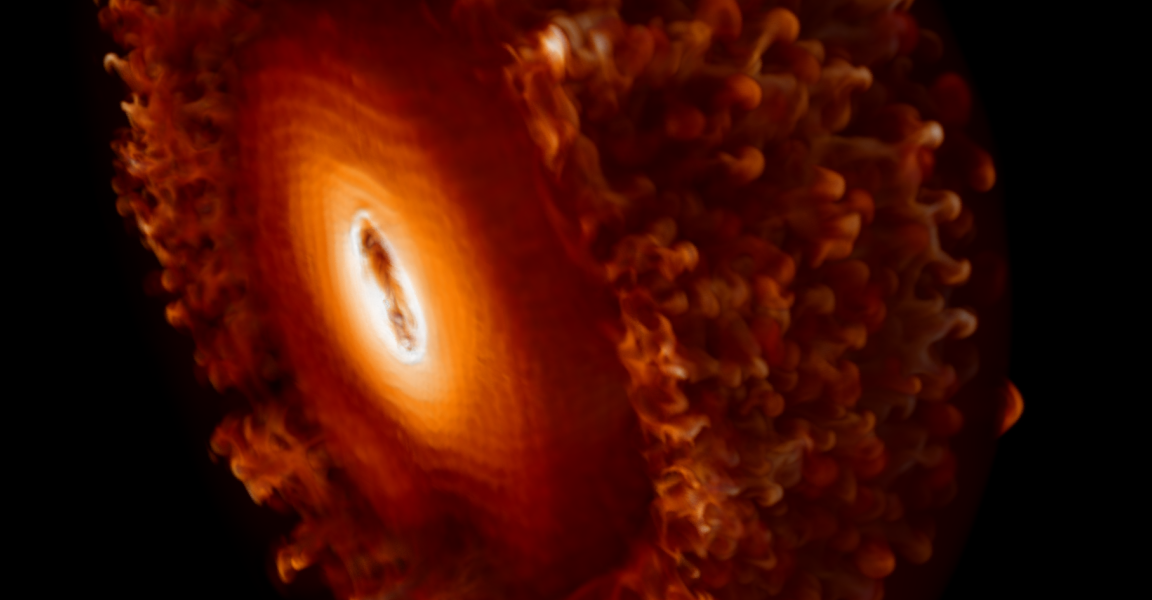
In a supernova, the intense density of matter and the extreme gravitational field may modify the neutrino mass hierarchy and mixing angles, altering the oscillation probabilities. If neutrinos swap identities (e.g., electron neutrinos converting to muon neutrinos), their energy distribution could shift. This shift might reduce the neutrino luminosity in the electron flavor channel, which is critical for the supernova’s energy transfer to the outer layers. A lower luminosity in this channel could prevent the necessary neutrino-driven convection that typically propels the explosion, leading to a direct collapse of the core into a black hole.
Energy Redistribution and Direct Collapse
The hypothesis posits that flavor swapping reduces the energy carried by electron neutrinos, which are the primary contributors to the supernova’s energy output. If this energy is redistributed to higher-flavor neutrinos (muon and tau), their interaction cross-sections with matter are much lower. This could result in insufficient energy deposition in the outer stellar envelope, failing to trigger the neutrino-driven shock wave that usually ejects material. Consequently, the core might collapse directly into a black hole, bypassing the traditional supernova explosion.
This scenario would challenge the standard model of core-collapse supernovae, which relies on the neutrino heating mechanism to drive the explosion. The observed neutrino flux anomalies in some supernova remnants, such as SN 1987A, have been interpreted as evidence of flavor transitions, though this remains a topic of debate.
Practical Implementation & Use Cases
Astrophysical Simulations and Detection
Astrophysicists model supernova dynamics using neutrino transport codes like NuGrid and SNEUT. These simulations incorporate oscillation parameters (e.g., mixing angles, mass squared differences) to predict neutrino fluxes and energy distributions. If the hypothesis holds, future simulations would need to account for flavor-dependent energy redistribution during core collapse.
Detecting the implications of this phenomenon requires high-energy neutrino observatories such as IceCube or Super-Kamiokande, which can measure neutrino flavors and energies. However, the low interaction cross-section of neutrinos makes precise flavor identification challenging. Advanced detector technologies, such as liquid scintillator arrays, may improve sensitivity to flavor transitions in supernova environments.
Industry Implications & Trade-offs
Impact on Supernova Research
The hypothesis could redefine supernova classification and black hole formation mechanisms. If direct collapse becomes more common, it would alter the stellar mass distribution and gamma-ray burst (GRB) correlations. This would have cascading effects on cosmological models, particularly those involving heavy element nucleosynthesis and gravitational wave detection.
Computational Challenges
Modeling neutrino oscillations in supernova simulations requires high-fidelity numerical methods, including three-flavor neutrino transport equations and quantum coherence effects. These computations are computationally intensive, often requiring parallel processing on GPU clusters. The proposed scenario would necessitate refined parameter spaces and non-linear coupling between neutrino oscillations and hydrodynamics.
Recommendations & Best Practices
- Validate Oscillation Parameters: Use up-to-date PMNS matrix values from experimental data (e.g., T2K or NOvA) to ensure simulations reflect current understanding.
- Cross-Check with Observational Data: Compare model outputs with neutrino flux measurements from supernova remnants to refine assumptions about flavor transitions.
- Optimize Computational Resources: Employ adaptive mesh refinement and parallel computing frameworks (e.g., OpenMP, MPI) to handle the complexity of multi-flavor neutrino simulations.
Frequently Asked Questions
Q1: How does neutrino oscillation affect supernova dynamics?
Neutrino oscillation redistributes energy across flavor channels. If electron neutrinos convert to higher-flavor neutrinos, the energy available for neutrino heating in the outer layers decreases. This could suppress the neutrino-driven shock wave, leading to direct core collapse rather than a traditional supernova explosion.
Q2: What are the detection challenges for flavor-swapping neutrinos in supernovae?
Neutrino detectors face two primary challenges: low interaction cross-sections and flavor discrimination. While detectors like IceCube can measure energy and direction, identifying flavor transitions requires high-statistics data and precise energy resolution, which is difficult in the extreme conditions of a supernova.
Q3: How does this hypothesis relate to dark matter research?
The hypothesis does not directly link to dark matter, but neutrino mass anomalies observed in supernova data could inform dark matter models. However, the two phenomena are distinct, and current evidence does not support a direct connection.
Q4: What are the computational implications for simulating this scenario?
Simulating flavor-dependent neutrino interactions requires solving three-flavor transport equations with non-linear coupling to hydrodynamics. This demands high-performance computing resources and advanced numerical methods, such as implicit time-stepping and adaptive mesh refinement, to capture the complex dynamics accurately.
